
The Strange Power of “Only 3 Left”
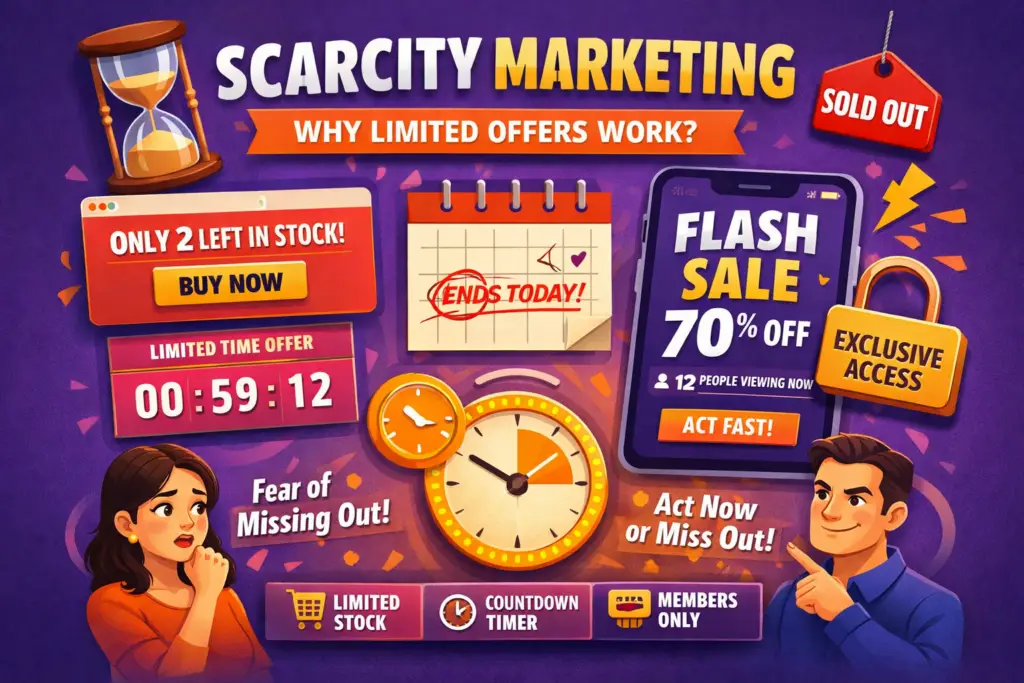
You are scrolling through a website casually. You were not planning to buy anything. Then suddenly you see a small line under a product:
“Only 3 left in stock.”
Or maybe,
“Offer ends in 2 hours.”
Something changes instantly.
You feel a subtle pressure. A small voice inside says, Maybe I should get this now.
Five minutes ago you did not even care about the product.
Now you are seriously considering buying it.
What changed?
The product did not change.
The price did not change.
What changed is perceived availability.
This is the quiet but incredibly powerful force behind scarcity marketing, one of the most effective psychological triggers used in digital marketing today.
Scarcity makes people act.
Let us break down why this happens, how marketers use it, and how you can apply it correctly without looking manipulative.
The Psychology Behind Scarcity
Humans are wired to value things that are rare or difficult to obtain.
If something is everywhere, our brain assumes it must not be that valuable.
But when something becomes limited, our perception changes immediately.
Psychologists call this the Scarcity Principle.
When availability decreases, perceived value increases.
This is deeply rooted in survival instincts.
For thousands of years humans had to compete for limited resources like food, shelter, and safety. Our brains still react strongly when something appears limited.
Scarcity activates two powerful emotions:
• Fear of missing out (FOMO)
• Loss aversion
Loss aversion is particularly powerful. Research shows people hate losing something twice as much as they enjoy gaining something.
So when a website says “Offer expires tonight”, people feel they might lose an opportunity.
And the brain reacts quickly.
Why Limited Offers Convert So Well in Digital Marketing
Scarcity works because it removes the biggest enemy of online sales.
Procrastination.
Most online visitors delay decisions.
They think:
“I’ll check later.”
“Maybe tomorrow.”
“I’ll compare other options first.”
But most of those people never come back. Scarcity interrupts this delay cycle.
When users see time or quantity limits, the decision shifts from:
“Should I buy this someday?”
to
“Should I buy this now or miss it?”
That simple shift dramatically increases conversions.
This is why you constantly see scarcity triggers on:
• E commerce websites
• SaaS landing pages
• Online course launches
• Travel booking platforms
• Flash sales
Real World Example: Booking.com’s Scarcity Machine
If you have ever booked a hotel online, you have seen this in action. Booking platforms like Booking.com use scarcity everywhere.
You might see messages like:
• “Only 1 room left at this price”
• “12 people are viewing this hotel”
• “Booked 5 times in the last 24 hours”
These messages do something very intentional.
They create urgency and competition. Even if you were just browsing hotels casually, suddenly it feels like others are about to grab the deal.
Your brain thinks:
“If others are booking it, maybe I should too.”
This combines scarcity with social proof, making the effect even stronger.
Types of Scarcity Marketers Use
Scarcity can take several forms in digital marketing. Each one triggers urgency in a slightly different way.
1. Time Based Scarcity
This is the most common version.
Examples:
• Flash sale ending in 6 hours
• Offer valid until midnight
• Black Friday deals
The goal is simple.
Reduce the time window so users feel they must act quickly. You see this heavily used in online course launches, product drops, and promotional campaigns.
Countdown timers are often added to visually reinforce urgency.
2. Quantity Based Scarcity
Instead of time, the limitation is stock availability.
Examples:
• Only 5 seats remaining
• Limited stock available
• Last 20 copies available
E commerce stores use this constantly. Even if the product is mass produced, showing limited inventory can increase purchase motivation.
This works especially well with high demand products.
3. Exclusive Access Scarcity
Sometimes the scarcity is based on who can access the offer.
Examples:
• Invite only access
• Members only pricing
• Early access for subscribers
This strategy works because exclusivity increases perceived status.
People feel they are part of something special or insider. Many SaaS companies use this during product launches.
For example, early versions of apps like Gmail or Clubhouse used invite systems to create massive curiosity and demand.
The Psychology of FOMO
Scarcity marketing is closely tied to FOMO, Fear of Missing Out.
FOMO is one of the most powerful emotional triggers online.
Social media amplified it dramatically.
People constantly see others:
• Buying products
• Traveling
• Attending events
• Joining communities
So when a limited offer appears, people do not just think about the product. They think about missing the experience.
This emotional layer is what makes scarcity marketing so effective.
Practical Ways to Use Scarcity in Digital Marketing
Let us move from theory to strategy. If you are running digital marketing campaigns, here are practical ways to apply scarcity effectively.
1. Use Limited Time Offers in Ads
Ads perform better when they include urgency.
Instead of writing:
“Get our SEO service today.”
Try:
“Limited time SEO audit offer for small businesses this week.”
This gives users a reason to act immediately.
2. Add Countdown Timers on Landing Pages
Countdown timers visually reinforce urgency.
They work especially well for:
• webinar registrations
• product launches
• course enrollments
But the timer must be genuine. Fake timers damage trust.
3. Highlight Limited Availability
If stock is genuinely limited, show it.
Examples:
• “Only 8 spots left for consultation”
• “Last 15 products available”
This works well for service based businesses too.
For example, a digital marketing agency might say:
“We onboard only 5 new clients per month.”
That instantly increases perceived demand.
4. Combine Scarcity With Social Proof
Scarcity becomes much stronger when paired with social signals.
Examples:
• “500 people already enrolled”
• “Only 10 seats remaining”
This tells users the offer is both popular and limited.
That combination drives action.
The Mistake Many Marketers Make
Here is where many businesses go wrong.
They fake scarcity. You have probably seen this before.
A website says:
“Only 2 left.”
You refresh the page.
Still “Only 2 left.”
Users eventually notice this pattern. When people feel manipulated, trust disappears quickly.
And trust is the foundation of long term marketing success.
Real scarcity works. Fake scarcity damages credibility.
Actionable Takeaways for Marketers
If you want to apply scarcity marketing effectively, keep these principles in mind.
• Use scarcity honestly, never fake limitations
• Pair urgency with real value
• Combine scarcity with social proof
• Use time limits strategically in promotions
• Make the message clear and visible
Remember, scarcity does not sell a bad product.
It simply helps people make decisions faster.
Final Thoughts
Scarcity marketing is powerful because it taps into deep human psychology. When something becomes limited, our brain automatically assigns it higher value.
Digital marketers use this principle every day. But the real skill is not just creating urgency. It is creating meaningful urgency around something genuinely valuable.
When done right, scarcity does not feel manipulative. It feels like an opportunity.
And the best marketing always makes people feel like they are discovering an opportunity they do not want to miss.
Key Takeaway for Marketers
Scarcity marketing works because people hate missing opportunities. When used honestly, limited time offers, countdown timers, and exclusive access can dramatically increase conversions.